
Fall Home Decor Transition Guide: Cozy Up Before Winter
Shift your home from late summer to fall in easy stages — warm the light, layer the textiles, and let candlelight do the rest of the work.

The first cool evening arrives without much warning. You step outside after dinner, feel it on your arms, and head back in thinking about a blanket. The fall transition starts there, in the body, long before it shows up on a calendar.
Decorating for fall works best the same way: gradually, and in response to how rooms actually feel. A wholesale swap on the first of September tends to look like a shop display. Slow shifts — a heavier throw here, a warmer bulb there — read as a home that is paying attention. What follows is a practical sequence you can stretch across a month, or compress into a rainy weekend if the mood strikes.
Start With the Light
Lighting does more for a seasonal shift than any pumpkin will. Cool white bulbs, the ones that read almost blue, feel like August long after the leaves have turned. Swap the bulbs in the lamps you use most for warm white ones, in the 2700K range, and the room changes character in about four minutes.
Then look at where the light comes from. Summer lighting tends to be overhead and bright. Autumn lighting is low and pooled. Add one lamp to a dark corner — behind a chair, beside a bookshelf — and switch off the ceiling fixture after dinner. If you have a dimmer sitting unused, this is the season it earns its place.
One more move: as daylight fades earlier, mirrors and pale walls do quiet work. Clean a mirror you've stopped noticing, angle it toward the window, and you borrow an extra hour of afternoon light.
Warm the Palette a Corner at a Time
You do not need to repaint. Fall color works best as accents against whatever neutral you already have, which also means you can undo it in ten minutes when spring arrives.
Choose two or three warm tones and let them repeat: rust and olive, ochre and cream, terracotta and deep brown. Then apply them where they are easy to swap — cushion covers, a throw, a table runner, the spines of a few books turned outward, a print in a frame you already own. Repeating a color three times in a room makes it look intentional. Scattering eight different autumn shades makes it look like a clearance aisle.
If your base is cool — gray walls, a blue sofa — lean toward warmer browns and coppers rather than orange. The contrast reads rich instead of jarring.
Layer Textiles, but Keep the Room Breathing
Fall is the season of texture. This is where you can be generous, as long as you add in the right order.
- Start at the floor. A wool or jute rug over a wood floor, or over a thinner summer rug, adds warmth without blocking the vents.
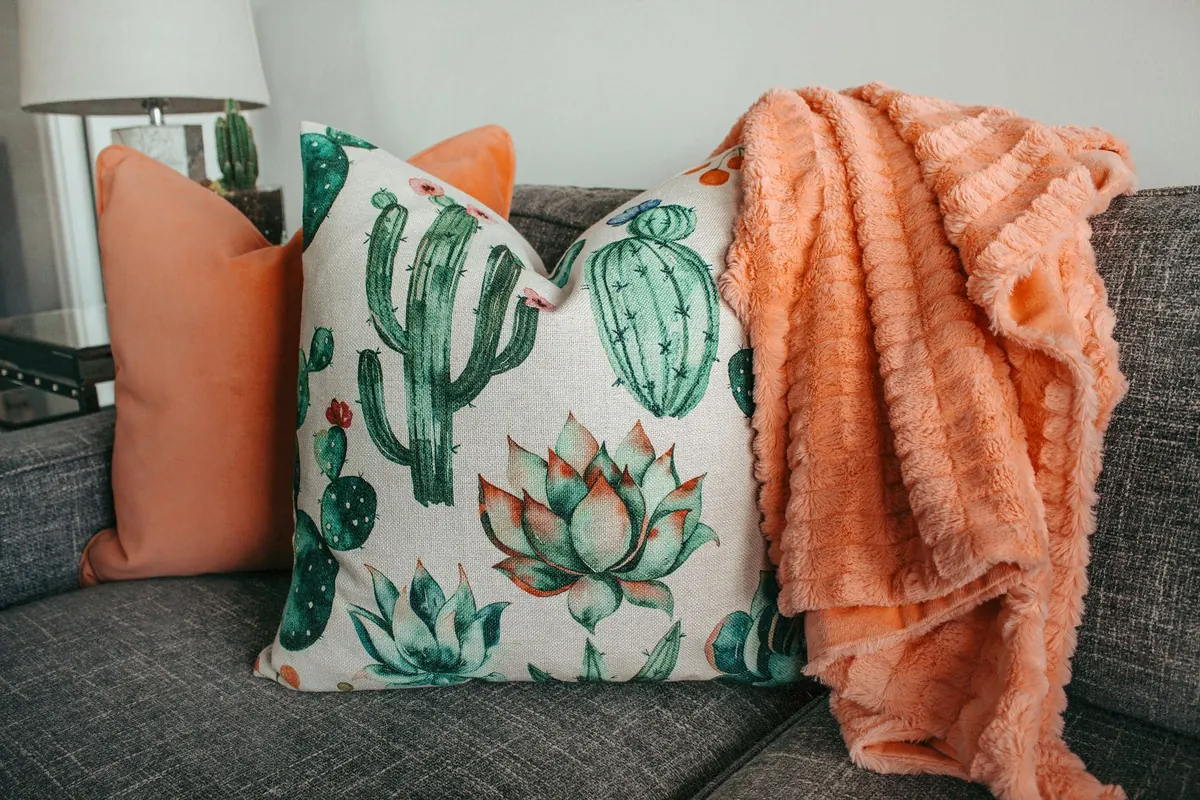
- Then the seating. One chunky knit or wool throw folded over an arm. Not three. One, so it looks used rather than stocked.
- Then the cushions. Swap two covers, not all of them. A linen cover next to a velvet one gives you the season in a single glance.
- Finally, the windows. Heavier curtains for the evening, or a second rod with a wool panel. Let the daylight in during the day; close them when the lamps come on.
Keep the summer linen accessible. Early fall still has warm afternoons, and layers you can peel off are better than layers you resent.
Let Candlelight Do Some of the Work
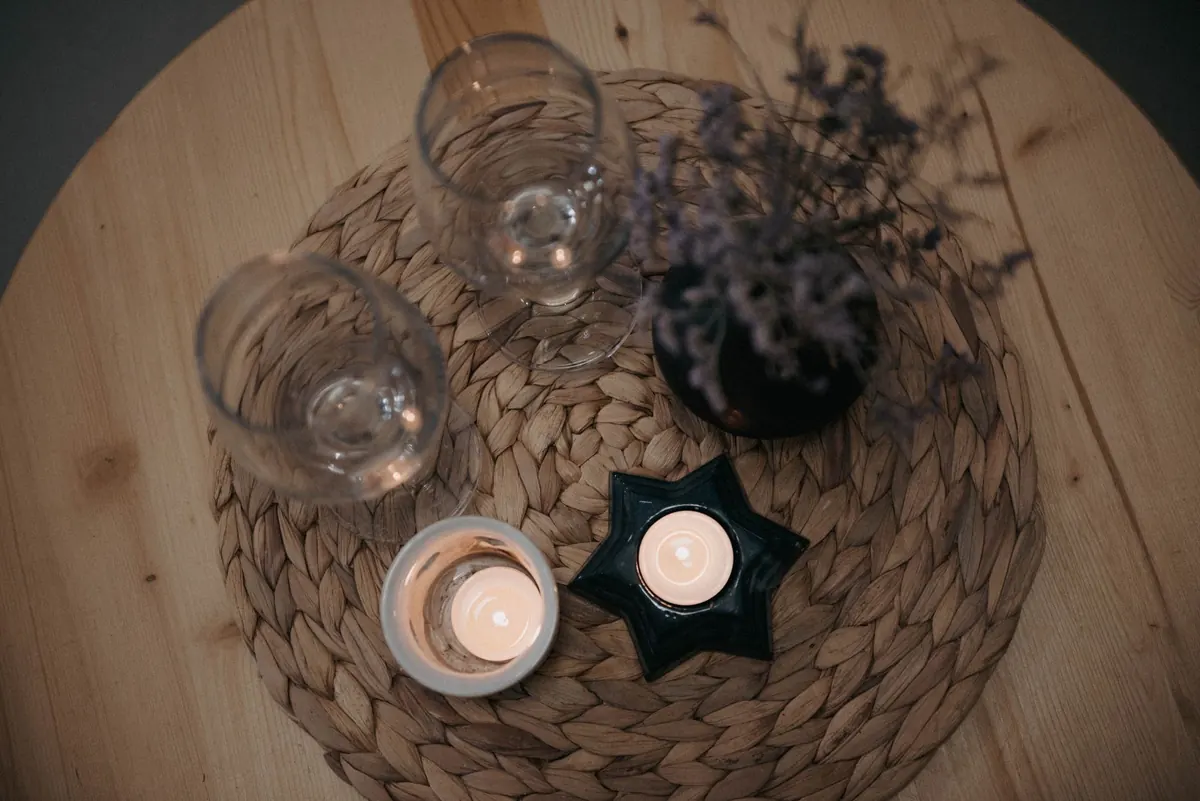
A few candles change a room more than a new piece of furniture, and they cost far less. Group three or five at different heights on a tray — a small taper, a pillar, a tea light in a glass — and place them where you actually sit, not where they look best from the doorway.
Beeswax and unscented candles suit rooms where you eat. Scented ones belong in hallways and bathrooms, where a little goes a long way. Two candles of the same scent in one room is usually one too many.
Never leave a burning candle unattended. Keep it away from curtains, paper and anything that can catch, trim the wick before each burn, and put it out before you leave the room or go to sleep.
If an open flame isn't practical — with pets, small children or a crowded shelf — battery-operated candles with a warm, flickering bulb get you most of the atmosphere with none of the risk.
Change the Surfaces You Touch Most
The transition lands fastest in the small places your hands go every day. Kitchen towels in a deeper tone. A wooden tray on the coffee table instead of a glass one. A heavier mug on the shelf, ready for the first hot drink of the season. A wool runner in the hallway.
The entryway deserves an early pass. A basket for slippers, a hook that holds a heavier coat, a dish for keys — that's the first room people feel the season in, and it takes fifteen minutes.
A Four-Weekend Plan
If you'd rather not do it all at once, this sequence keeps the work small and the payoff steady.
- Weekend one: bulbs, lamps and candle placement.
- Weekend two: textiles — rugs, throws, two cushion covers.
- Weekend three: accents — palette, art, trays, table linens.
- Weekend four: the finishing pass, done by candlelight with a hot drink in hand.
Start Where You Sit
You don't have to finish the whole house. Pick the one chair or corner where you spend the most time in the evening, and make that spot warm: a lamp within reach, a throw, a candle, something soft underfoot. The rest of the house tends to follow on its own.
Leave one thing undone until the first genuinely cold night. There's a particular pleasure in pulling out the heaviest blanket exactly when you need it, rather than having it sit on the sofa since September. Fall, done slowly, gives you something to look forward to all the way into winter.
Photo: an_photos / Pixabay